Timber Cladding Durability Explained: Classes, Service Life & Choosing the Right Species
27th February 2026
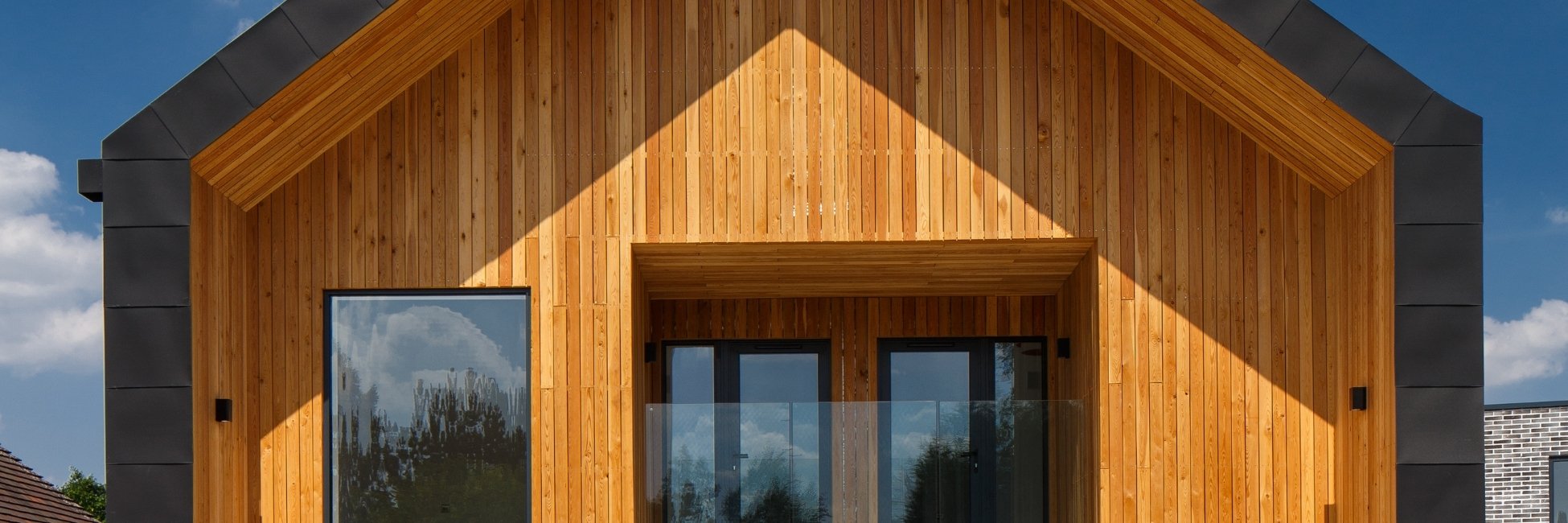
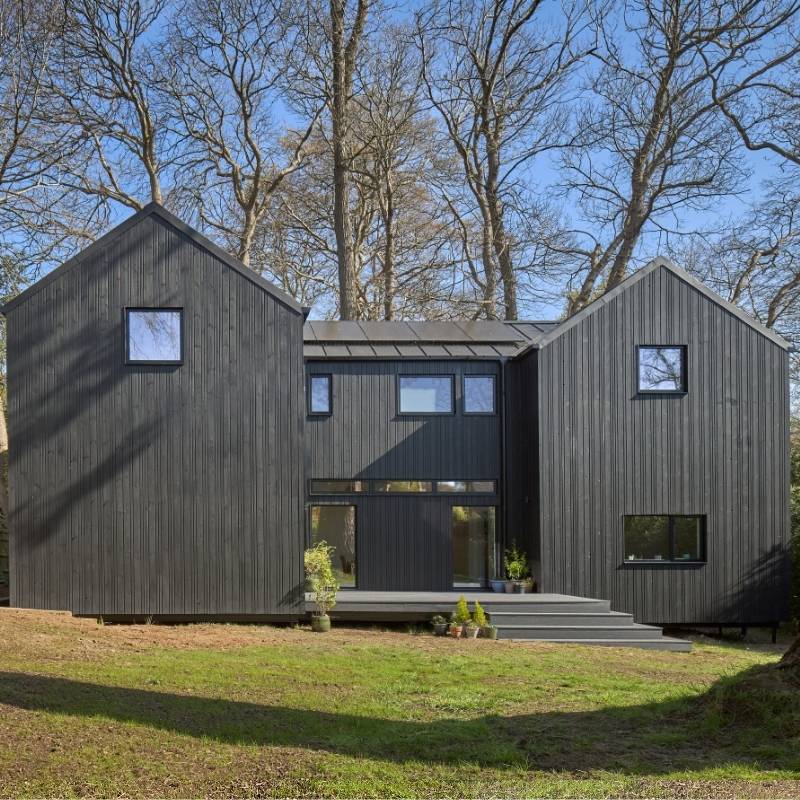
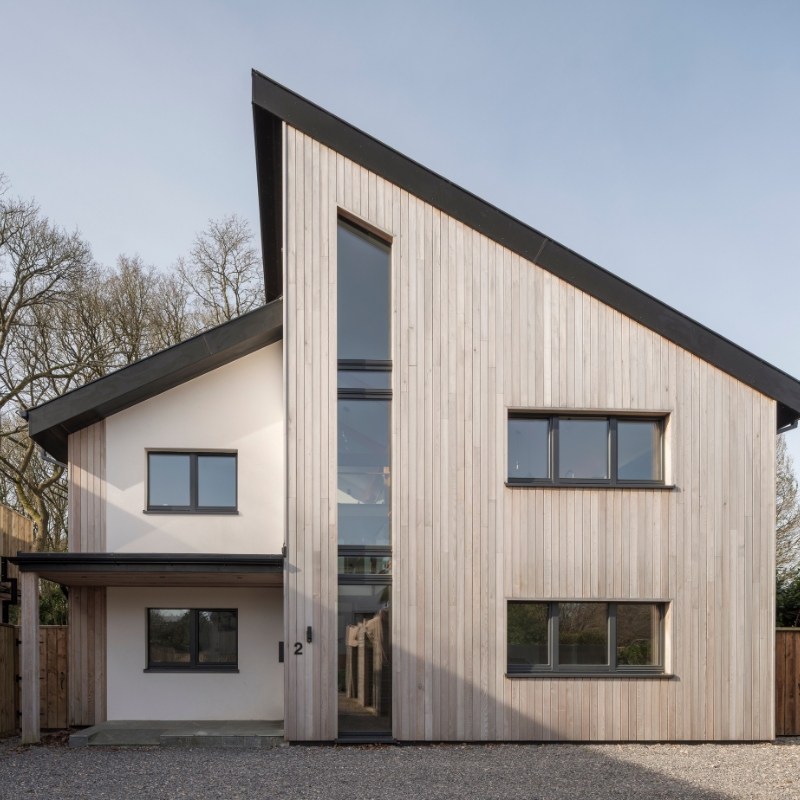
Timber cladding has become a defining feature of contemporary architecture across the UK, valued for its natural character, sustainability credentials and adaptability across residential and commercial buildings. However, one of the most important, and often misunderstood, considerations of timber specification is durability. One question we are frequently asked is:
“How long will timber cladding last?”
The answer depends on several interconnected factors – species selection, durability class, detailing and maintenance all play a role in determining long-term performance. Understanding durability classes and service life early helps ensure the chosen material aligns with both design intent, maintenance requirements and performance expectations.
In this guide we’ll explore:
- how timber durability is classified under UK standards
- what “desired service life” really means in practice
- the difference between naturally durable and modified timbers
- how to select the right species for different project requirements
What is timber durability?
External timber performs in a demanding environment. In the UK particularly, façades experience frequent rainfall, high humidity, limited drying periods during winter months, UV exposure and natural surface weathering. Selecting a timber suited to the intended application is essential because not all species perform in the same.
Timber durability refers to a species’ natural resistance to decay caused by fungi and biological attack when exposed to moisture. This resistance is primarily influenced by the heartwood, which contains natural extractives that slow fungal growth.
It is also important to distinguish between durability and weathering. Timber may fade or change colour over time due to UV exposure without any reduction in structural performance. Weathering is an aesthetic process, whereas durability relates to the material’s ability to resist decay when correctly detailed and ventilated.

Understanding timber durability classes
In the UK, timber durability is classified under BS EN 350, which groups species according to their resistance to decay. Durability classes are often considered alongside desired service life, which describes the length of time a building component is expected to perform before major repair or replacement becomes necessary.
| Class | Durability rating | Desired Service Life* |
|---|---|---|
| 1 | Very durable | 30-60 years |
| 2 | Durable | 30 years |
| 3 | Moderately durable | 15 years |
| 4 | Slightly durable | <15 years |
| 5 | Not durable | <15 years |
For external cladding applications a Class 3 or above is required to achieve a minimum desired service life of 15 years. For most UK projects targeting a 30-year service life, a Class 2 timber or higher is typically specified.
Durability class provides us with a useful baseline for material selection, but the final lifespan of a cladding system will also be influences by installation detailing, ventilation and maintenance.
*These figures assume external timber cladding as frequently wet with correct design detailing and ventilation. They should be used as guidance rather than absolute lifespan predictions.
Naturally durable vs Modified timbers
Timber cladding solutions generally fall into two categories: naturally durable species and modified timber species. Understanding the difference helps align timber choice with project performance requirements.
Naturally Durable Timber
Some species naturally resist decay due to natural extractives contained within their heartwood. These timbers are valued for their authentic character, natural weathering patterns and relatively simple processing.
Western Red Cedar is one of the most widely specified examples due to its stability, lightweight nature and consistent appearance → Designing with Western Red Cedar
Larch species are also commonly used for timber cladding, providing a durable softwood option that weathers naturally and offers a distinctive grain pattern → Beyond Siberian Larch
Modified Timber
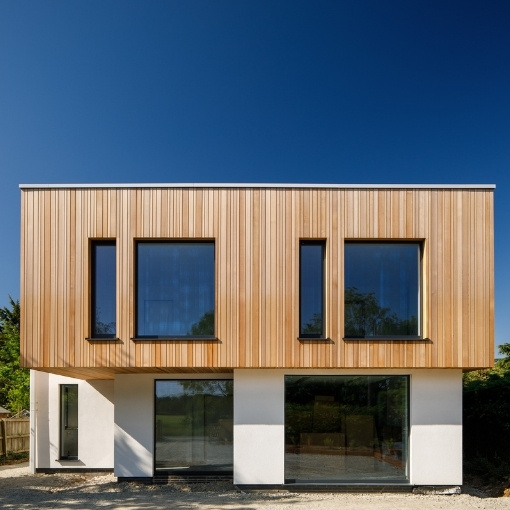
Modified timber undergoes a process that alters the structure of the wood at a cellular level to improve durability and dimensional stability. These processes typically include thermal modification or acetylation, both of which limit the timber’s ability to absorb moisture, resulting in improved durability classification and reduced movement.
Thermally modified radiata pine products such as Abodo Vulcan® and Imbue™ achieve class 1 durability while retaining the character of natural timber. They are often specified where consistent performance and reduced maintenance cycles are required → A Guide to Abodo & Imbue
Timbers treated to the ThermoWood® quality standard, such as ThermoWood® Ash and ThermoWood® Pine, undergo controlled thermal treatment that improves stability and biological resistance to decay → ThermoWood® Explained
Timber modified through acetylation result in highly stable boards with an inability to reabsorb moisture. An example is Accoya Color Grey, which uses acetylation technology combined with through colouring to create a stable, pre-weathered cladding material designed for long design-life projects → Low Maintenance Grey Timber
Comparing timber species
| Timber species | Durability Class | Type | Stability | Maintenance | Best for |
|---|---|---|---|---|---|
| Abodo Vulcan® | Class 1 | Thermally modified | Very high | Low | Contemporary facades with a vertical grain appearance. |
| Accoya® Color Grey | Class 1 | Acetylated | Very high | Low | Pre-weathered finish with minimal maintenance. |
| ThermoWood® Ash | Class 1 | Thermally modified | Very high | Low | Premium hardwood aesthetic. |
| Imbue™ | Class 1 | Thermally modified | High | Low | Consistent appearance with minimal knots. |
| ThermoWood® Pine | Class 2 | Thermally modified | High | Low | Versatile finishing and installation options. |
| Western Red Cedar | Class 2 | Natural | High | Low | Striking colour and consistent natural weathering. |
| BCLarch® | Class 3 | Natural | Moderate | Medium | Alternative to Siberian Larch. |
| ICENILarch® | Class 3 | Natural | Moderate | Medium-High | Locally sourced, cladding option. |
Factors that influence cladding lifespan
Timber durability alone does not determine how long a cladding system will perform. Installation, detailing, and exposure to environmental conditions all play a significant role.
Timber cladding should always be installed with a ventilated cavity that allows air movement behind the boards. This enables moisture to evaporate between wetting cycles, preventing prolonged damp conditions that can encourage fungal decay. End grain requires particular attention. Timber absorbs water far more quickly through exposed end grain than through board faces. Sealing cut ends and ensuring accurate on-site cutting significantly improves long-term performance.
Factory coatings protect timber from UV degradation and surface moisture, helping maintain colour consistency and extending maintenance intervals. However, coatings do not change the timbers inherent durability, they only influence weathering and lifecycle maintenance. Installation methods that minimise board surface penetration help reduce potential water ingress points and prolong the lifecycle of factory coatings.
Choosing the right timber for your project
A practical way to approach timber selection is to prioritise your project goals rather than starting with species alone. Timber is sometimes selected purely for visual reasons, but durability class, stability and environmental exposure should always be considered alongside appearance to ensure the cladding performs as intended.
Low-maintenance façades benefit from stable, long-lasting timbers that achieve Class 1 or Class 2 durability through thermal or acetylated modification. Projects seeking strong visual impact may favour ThermoWood® Pine, where enhanced stability allows for a wide variety of profiles, textures and finishing options. High-spec projects targeting long design lives often opt for Class 1 modified timbers such as Abodo Vulcan®, Accoya® or ThermoWood® Ash.
A useful decision framework is to consider three questions early in the design process:
- What service life is the building targeting?
- How much maintenance access will be available over time?
- Do I want the timber to weather naturally or retain a consistent colour?
Answering these questions helps narrow species selection while aligning durability, aesthetics and maintenance expectations throughout the project lifecycle.
Support & resources
Every project presents different performance requirements. Early species selection helps align durability with budget, appearance and maintenance expectations.
Our team can provide guidance on species comparison, detailing considerations and specification support. Get in touch on 01223 967733 or info@millworks.co.uk or follow the link below to contact us.